Why Homeschool?
What's Popular
The Why of Homeschool
Transitioning from Parent to Homeschool Teacher: Are You Qualified?
The Home-School Advantage
The Seduction of Homeschooling Families
Ten Reasons Not to Homeschool
The Privacy Advantages of Homeschooling
Government Schooling Comes to America: The Origins of Government Schooling in the United States
Is Homeschooling Anti-Social?
Socialization: A Great Reason Not to Go to School

Should I Home School?: How to Decide What's Right for You & Your Child
Homeschooling: Back to the Future?
Why We Are (gulp!) Home Schooling
8 Powerful Reasons Why I Unschool My Kids
Homeschooling--It's a Growing Trend Among Blacks
Estimated Number of Homeschooled Students in the United States - 2003
Resources

They're Your Kids: An Inspirational Journey from Self-Doubter to Home School Advocate
For many people, their schooling was uncomfortable, tedious, and sometimes a waste of time and energy. This book offers the idea that the public school system is tragically flawed and that we are able to do better for our own children. Sam Sorbo, mom of three and wife of actor Kevin Sorbo, took the leap into homeschooling and found the joy and success she was seeking. Included are strategies for working parents, those who are scared to take the leap, and anyone who wants the best for their children.

Homeschool Bravely: How to Squash Doubt, Trust God, and Teach Your Child with Confidence
It's time to change your perspective to transform the way you plan, teach, and homeschool. This book helps you to see homeschooling as a calling. With this mindset, you'll be able to dismiss the stress of impossible expectations. Find strategies to help you juggle the logistics of homeschooling with different ages, be a good support for a struggling learner, set realistic goals, dismiss the guilt, and weather any criticism. You can be a hopeful homeschooler! God uses all for good and can transform all of your stress, fears, shortcomings, and successes to create the best plans for your family.

The Exhausted School: Bending the Bars of Traditional Education

But What About Socialization? Answering the Perpetual Home Schooling Question: A Review of the Literature

A Different Kind of Teacher: Solving the Crisis of American Schooling

The Homeschooling Revolution

Dumbing Us Down: The Hidden Curriculum of Compulsory Schooling

Why We Homeschool
It is a common misconception that most parents homeschool due to bullies, school shootings, or bad teaching content. While these things are important, there is a higher purpose for choosing to home education your children. Even if all those things were corrected, there are stronger reasons to stay committed to the homeschool model. So why do you homeschool? This book looks at the meaning and significance of a true Christian education.
Should I Home School?: How to Decide What's Right for You & Your Child
Have questions about homeschooling? This book has the answers. The information in this book will help you decide if homeschooling is right for you and your child.

Kingdom of Children : Culture and Controversy in the Homeschooling Movement (Princeton Studies in Cultural Sociology)
More than one million American children are schooled by their parents. As their ranks grow, home schoolers are making headlines by winning national spelling bees and excelling at elite universities. The few studies conducted suggest that homeschooled children are academically successful and remarkably well socialized. Yet we still know little about this alternative to one of society's most fundamental institutions. Beyond a vague notion of children reading around the kitchen table, we don't know what home schooling looks like from the inside.
Sociologist Mitchell Stevens goes behind the scenes of the homeschool movement and into the homes and meetings of home schoolers. What he finds are two very different kinds of home education--one rooted in the liberal alternative school movement of the 1960s and 1970s and one stemming from the Christian day school movement of the same era. Stevens explains how this dual history shapes the meaning and practice of home schooling today. In the process, he introduces us to an unlikely mix of parents (including fundamentalist Protestants, pagans, naturalists, and educational radicals) and notes the core values on which they agree: the sanctity of childhood and the primacy of family in the face of a highly competitive, bureaucratized society.
Kingdom of Children aptly places home schoolers within longer traditions of American social activism. It reveals that home schooling is not a random collection of individuals but an elaborate social movement with its own celebrities, networks, and characteristic lifeways. Stevens shows how home schoolers have built their philosophical and religious convictions into the practical structure of the cause, and documents the political consequences of their success at doing so.
Ultimately, the history of home schooling serves as a parable about the organizational strategies of the progressive left and the religious right since the 1960s.Kingdom of Children shows what happens when progressive ideals meet conventional politics, demonstrates the extraordinary political capacity of conservative Protestantism, and explains the subtle ways in which cultural sensibility shapes social movement outcomes more generally.
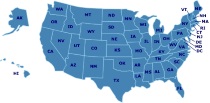
Looking for Another State?
Featured Resources
As an Amazon Associate, we earn from qualifying purchases. We get commissions for purchases made through links on this site.

Traffic: Why We Drive the Way We Do (and What It Says About Us)

Great Lodges of the National Parks: The Companion Book to the PBS Television Series

Understanding Waldorf Education : Teaching from the Inside Out

Kids' Poems (Grades 1)
